
Schools as the Ultimate Sorting Mechanism: Capitalization of Education Quality into Home Prices
Date Published
Public school is free only in the narrow accounting sense. A family may never receive a tuition bill from the district, yet the right to attend a particular set of schools is often bundled into the purchase or rental of a home. In metropolitan housing markets, the school boundary can function like a price tag.
For families with children, school quality is often the strongest Tiebout sorting variable because its benefits recur every year and cannot be bought separately once a home is chosen. StatisNostics ranks Chicago at 20 and Oak Brook at 89 on a higher-is-better scale. Their student-to-teacher ratios are 28.14 and 10.09, respectively.[9]
The latest U.S. Census Bureau QuickFacts estimates place median owner-occupied home values at $334,100 in Chicago and $903,200 in Oak Brook, based on 2020-2024 data.[1][2] The Oak Brook median is $569,100 higher, or 2.70 times Chicago's.
$569,100 | THE PRICE GAP |
This comparison is illustrative, not causal. Housing stock, lot size, income, commuting patterns, amenities, and other characteristics also differ. Still, the contrast shows the capitalization mechanism: when a local public-service bundle is more desirable and housing supply is limited, the entry price can rise far beyond the direct tax difference.
DATA SNAPSHOT
Indicator | Chicago | Oak Brook | How to read it |
School ranking | 20 | 89 | Higher is better |
Student-to-teacher ratio | 28.14 | 10.09 | Lower is better |
Median home value | $334,100 | $903,200 | Census 2020-2024 |
Average property tax | $5,504 | $11,608 | Annual average |
City spending per capita | $6,998 | $7,688 | FY2024 context |
The price of access
Public education has no sticker price at the schoolhouse door, but access is zoned. Households purchase eligibility by securing an address. That makes housing a joint product: shelter plus a claim on local schools and services.
Compared with Chicago, Oak Brook's median owner-occupied home value is 170 percent higher. The average property tax is also higher, $11,608 versus $5,504, but the tax difference is $6,104 per year, tiny compared with the observed housing-value gap. A buyer does not literally pay $569,100 only for schools. The premium reflects the entire place, including housing characteristics and amenities. Yet school access is one of the few components that cannot be detached from the address.
Capitalization also changes the timing of the payment. A family pays a large amount upfront, then may recover part of the premium on resale if the district remains desirable. The premium is therefore both a cost of consuming school access and an asset price tied to future demand.
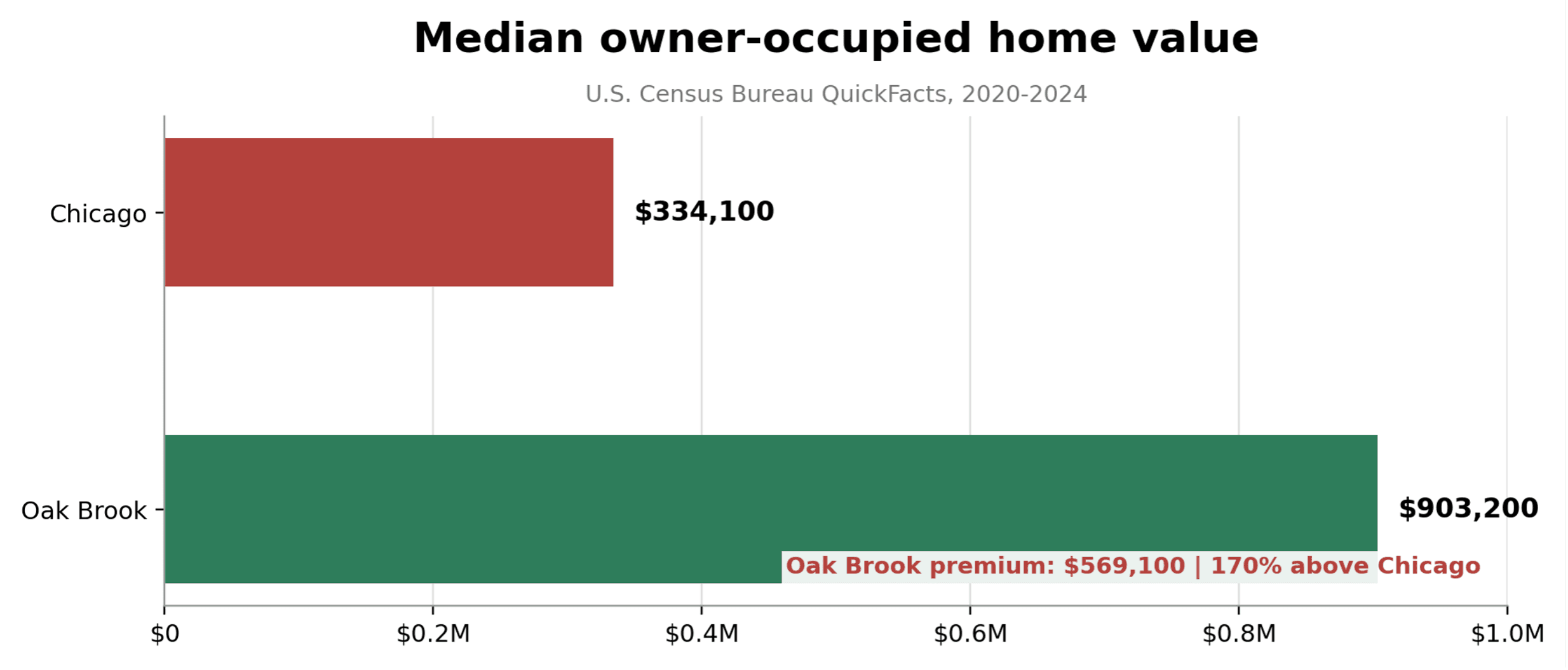
Figure 1. Home values show the market price of the residential bundle. Source: U.S. Census Bureau QuickFacts, 2020-2024 estimates.
School signals that buyers can see
The StatisNostics school ranking and the student-to-teacher ratio measure different things. The ranking summarizes relative school performance. The ratio indicates staffing intensity. In this comparison, both point in the same direction.[9]
Chicago's student-to-teacher ratio is 2.79 times Oak Brook's. A ratio is not the same as class size, and it does not by itself prove instructional quality. Still, a lower ratio can signal more staff capacity, more individual attention, and fewer resource constraints, all of which matter to households evaluating districts.
Rankings are especially powerful because housing shoppers can compare them quickly. A complex educational process becomes a single, legible number. Once those numbers influence demand, they can become part of the capitalization process even when they imperfectly capture quality.
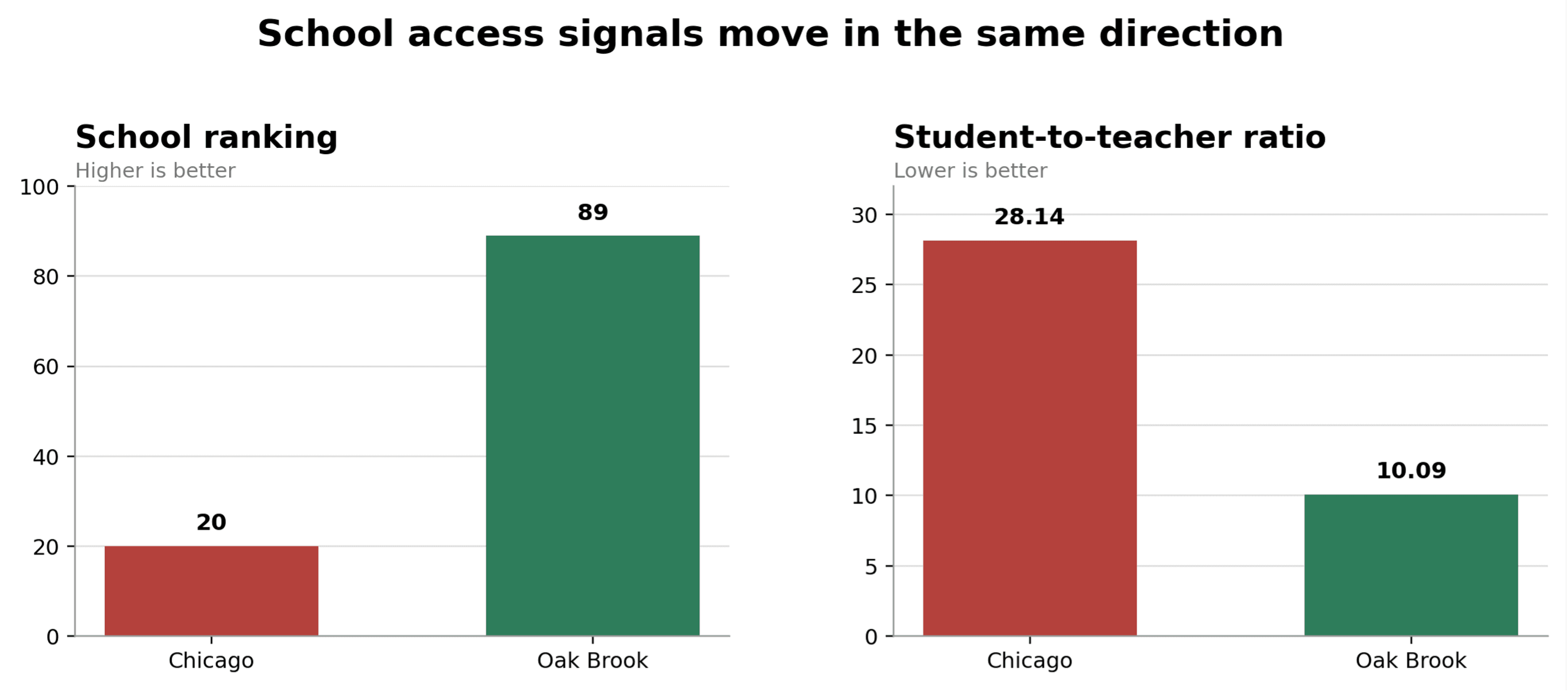
Figure 2. Oak Brook combines a higher school ranking with a lower student-to-teacher ratio. Source: StatisNostics.
Taxes, spending, and the local bundle
Average property taxes are 111 percent higher in Oak Brook, while city spending per capita is only 9.9 percent higher. The provided FY2024 spending figures are $6,998 for Chicago and $7,688 for Oak Brook.[3][9]
City spending per capita is fiscal context, not a measure of school spending. Municipal governments and school districts have distinct budgets and sometimes different boundaries. That distinction matters. The Tiebout choice is over a bundle of taxes and public services, not a single budget line.
Higher taxes can reduce home values when they are not matched by services households value, while better services can support values. The observed price is the market's net judgment about the whole package. Oak Brook's much larger home-value gap, relative to its more modest city-spending difference, is consistent with a market paying for scarce location-specific attributes rather than simply reimbursing government outlays dollar for dollar.
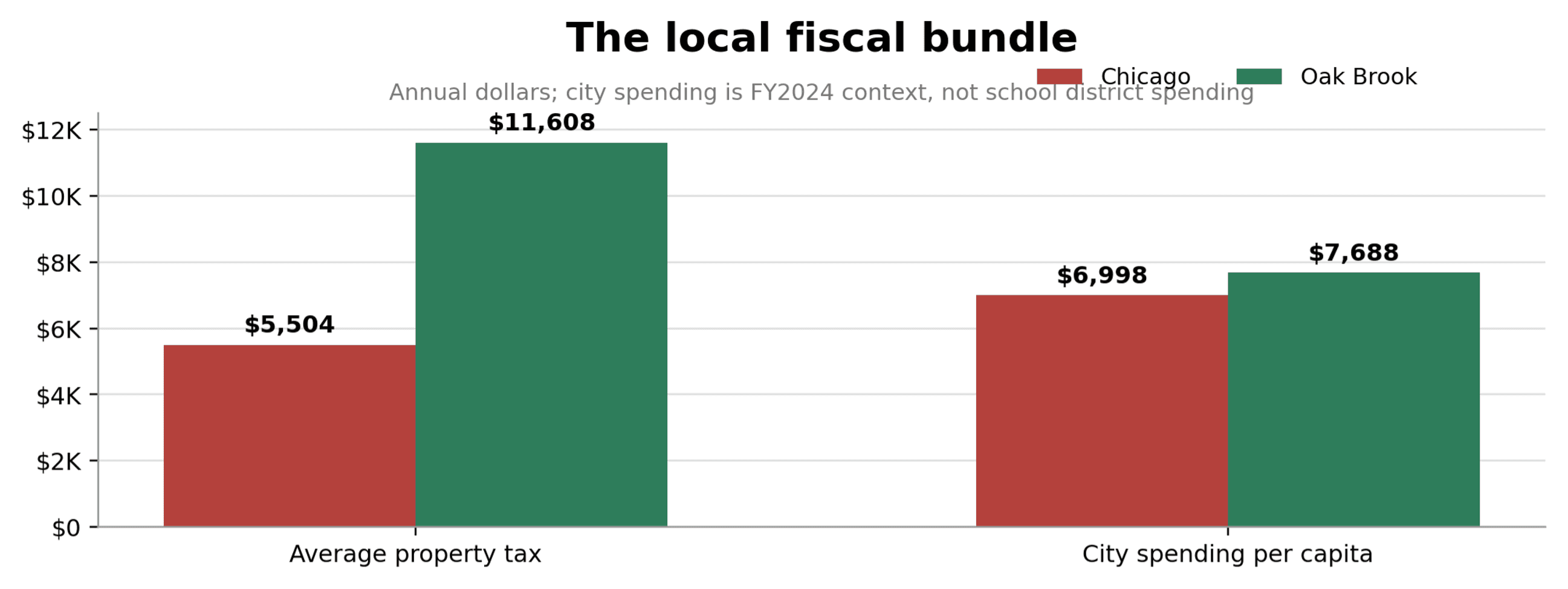
Figure 3. Fiscal differences are meaningful, but smaller than the housing-value gap. Sources: StatisNostics brief and Illinois Office of Comptroller, FY2024.
From Tiebout sorting to Oates capitalization
In 1956, Charles Tiebout proposed that households reveal their preferences for local public goods by choosing among jurisdictions. They vote with their feet, selecting the tax-service package that best fits their needs.[7]
School quality is the clearest family example. A household that values education highly bids for a home in a jurisdiction expected to deliver it. When many households make the same choice and housing cannot expand freely, prices rise. The market-clearing price rations access.
Wallace Oates's 1969 capitalization study made the housing-price channel central to empirical local public finance. He examined how property taxes and local public spending are reflected in property values, turning the Tiebout story from a mobility model into a testable asset-pricing proposition.[8]
"You do not pay tuition directly. You pay a housing premium." |
The key implication is simple: public services do not remain off balance sheet. Expectations about them are embedded in land and housing values. The housing premium is the market-clearing mechanism in the Tiebout story.
Enrollment is the pressure gauge, not the verdict
To add a demand-side signal, official enrollment data show Chicago Public Schools rising from 323,251 students in 2023-24 to 325,305 in 2024-25, a gain of 0.6 percent.[4] Butler School District 53, used here as an Oak Brook-based K-8 enrollment indicator, moved from 469 to 463 students, a decline of 1.3 percent.[5][6]
A one-year change does not overturn long-run sorting. Enrollment responds to births, cohort sizes, housing turnover, private-school choices, immigration, development, and district boundaries. Small districts are especially volatile: six students can move the percentage meaningfully.
Still, enrollment is useful because it helps separate current student flow from capitalized expectations. A district can maintain expensive housing during a small enrollment decline if buyers continue to value access, resale option value, and the broader community bundle. Conversely, a large district can add students without generating the same price premium when supply, housing mix, and neighborhood variation are much greater.
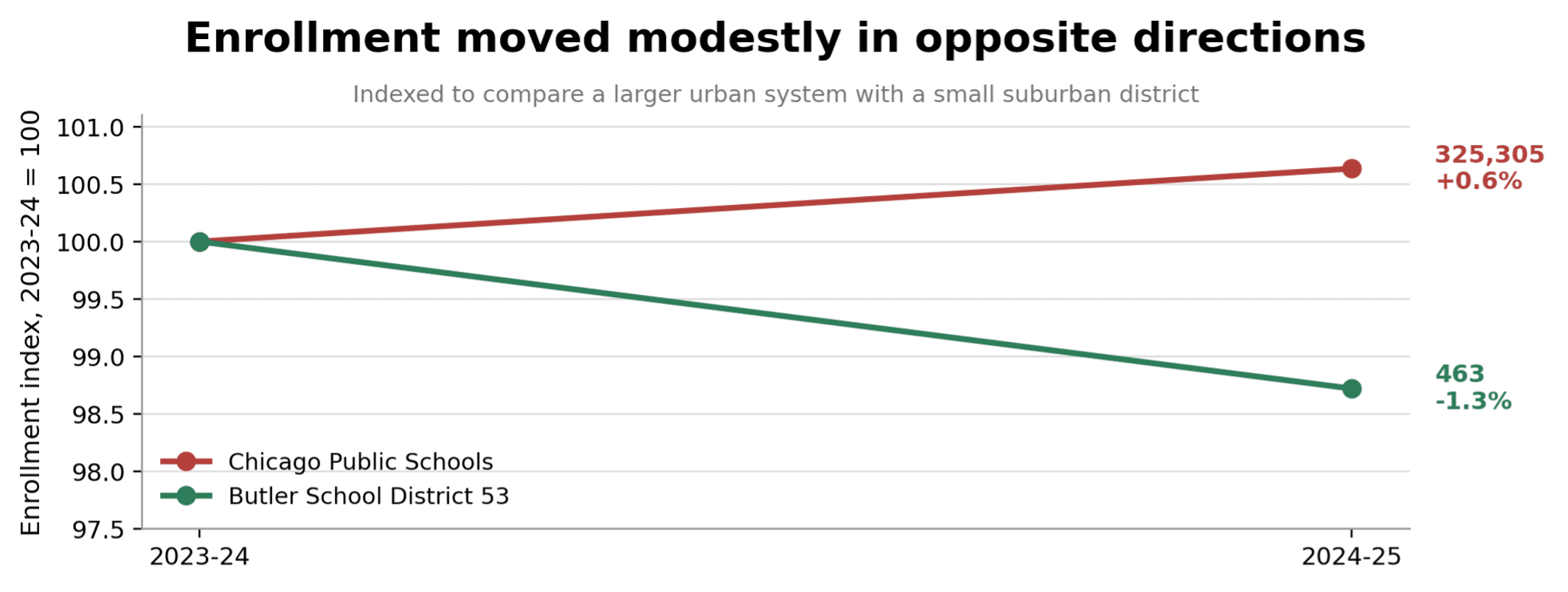
Figure 4. One-year enrollment changes are modest and should not be read as a causal test of capitalization. Sources: Chicago Public Schools and Illinois State Board of Education.
Where the model breaks: preference becomes income
Tiebout's model is elegant because it treats mobility as preference revelation. But mobility is not free. When the entry ticket is a $903,200 median home, households with identical educational preferences can face radically different feasible choices.
This is the equity limitation. Sorting by preference becomes sorting by income and wealth. A higher-income household can convert demand for school quality into a residential bid. A lower-income household may value the same schools just as strongly but cannot clear the housing price.
Capitalization can reinforce itself. Strong school signals attract demand. Demand raises home values. Higher values can strengthen the local tax base and create resale expectations. Rising entry prices then narrow who can move in. The mechanism allocates efficiently in the narrow market sense, but it can reproduce unequal access to public education.
This does not mean every dollar of the Oak Brook premium is a school premium. It means the housing market is the institution that converts place-based advantages, including school quality, into a price.
Why capitalization matters for policy
Capitalization creates a distributional split. Existing owners may receive an asset gain when school quality or reputation improves. New buyers pay a higher entry price. Renters can face higher housing costs without capturing the increase in property value.
Policies that widen school choice, expand housing supply, or equalize educational resources can soften the link between a school boundary and a home price. None eliminates it completely because families also value peers, amenities, commuting, and future resale demand.
The relevant question is not whether families should care about schools. It is whether residential purchasing power should be the only practical way to act on that preference.
The ultimate sorting mechanism
Chicago and Oak Brook are not a controlled experiment, but they make the Tiebout mechanism visible. Oak Brook combines a higher StatisNostics school ranking, a far lower student-to-teacher ratio, higher property taxes, and a median home value 2.70 times Chicago's. The household does not write a tuition check. It bids for a house.
The premium is the market-clearing mechanism Tiebout predicted and the capitalization channel Oates helped quantify. It reveals demand for education, but it also reveals who can afford to act on that demand. Public school may be tuition-free. Access to a highly valued district is not.
Methodology and sources
The comparison is descriptive. It does not control for housing size, lot size, age of structures, household income, transportation access, crime, amenities, zoning, or other factors that affect home values. Median home values are Census estimates for owner-occupied units, not current sale prices. The Oak Brook enrollment trend uses Butler School District 53 as a local K-8 indicator and does not represent every school jurisdiction serving Oak Brook.
[1] U.S. Census Bureau QuickFacts: Chicago city, Illinois. Median value of owner-occupied housing units, 2020-2024: $334,100. Accessed July 17, 2026.
[2] U.S. Census Bureau QuickFacts: Oak Brook village, Illinois. Median value of owner-occupied housing units, 2020-2024: $903,200. Accessed July 17, 2026.
[3] Illinois Office of Comptroller, Local Government Financial Databases. FY2024 local government fiscal context.
[4] Chicago Public Schools, FY2026 Proposed Budget Book. Appendix A reports 2024-25 enrollment of 325,305, an increase of 2,054 from the prior year.
[5] Illinois State Board of Education, FY25 Final IDEA Part B Preschool Allocations. Butler School District 53 final public enrollment for 2023-24: 469.
[6] Illinois State Board of Education, FY26 Final IDEA Part B Preschool Allocations. Butler School District 53 final public enrollment for 2024-25: 463.
[7] Charles M. Tiebout, "A Pure Theory of Local Expenditures", Journal of Political Economy 64, no. 5, 1956.
[8] Wallace E. Oates, "The Effects of Property Taxes and Local Public Spending on Property Values: An Empirical Study of Tax Capitalization and the Tiebout Hypothesis", Journal of Political Economy 77, no. 6, 1969.
[9] StatisNostics dataset supplied for this article: school ranking, student-to-teacher ratio, average property tax, and city spending per capita. School ranking is higher-is-better.
INTERPRETATION NOTE
The home-value premium is the difference between the two reported medians. It should not be interpreted as a causal estimate of the price of school quality. The analysis uses the contrast to explain the Tiebout and Oates capitalization mechanism.